
6. What Is the Difference Between a Glazed and an Unglazed Bonsai Pot?


One of the questions we are asked most frequently is whether a bonsai should be displayed in a glazed or an unglazed pot. While there are traditional guidelines, the answer is far less straightforward than many people think.
At Made Bonsai Pots, we don’t simply look at the species of the tree. Instead, we focus on the character of the bonsai and the harmony between the tree and its pot.
The Traditional Guideline
Traditionally, conifers are most often paired with unglazed bonsai pots. The natural appearance of the clay complements the rugged bark, dark green foliage and strong, timeless character of these trees.
Deciduous trees, on the other hand, are more commonly displayed in glazed pots. A subtle glaze can beautifully enhance the colours of leaves, flowers or fruit, adding refinement and elegance to the overall composition.
These are useful guidelines—but they are certainly not fixed rules.
The Character of the Tree Comes First
A powerful deciduous tree can look stunning in an unglazed pot, while an elegant pine may benefit from a very subtle glaze.
That’s why we always begin by studying the character of the bonsai.
Is the tree powerful or delicate? Young or mature? Formal and structured, or rugged and full of movement? All of these characteristics influence the choice of the most suitable bonsai pot.
Glaze Creates Atmosphere
A glaze does much more than simply add colour.
A glossy glaze can bring a bonsai to life by reflecting light and adding depth to the surface. A matte or satin glaze, on the other hand, creates a calmer, more natural appearance.
The colour of the glaze also influences the mood of the composition. Sometimes it subtly echoes the flowers or autumn colours of the tree, while in other cases a quiet earth tone provides the perfect balance.
No Two Glazes Are Ever the Same
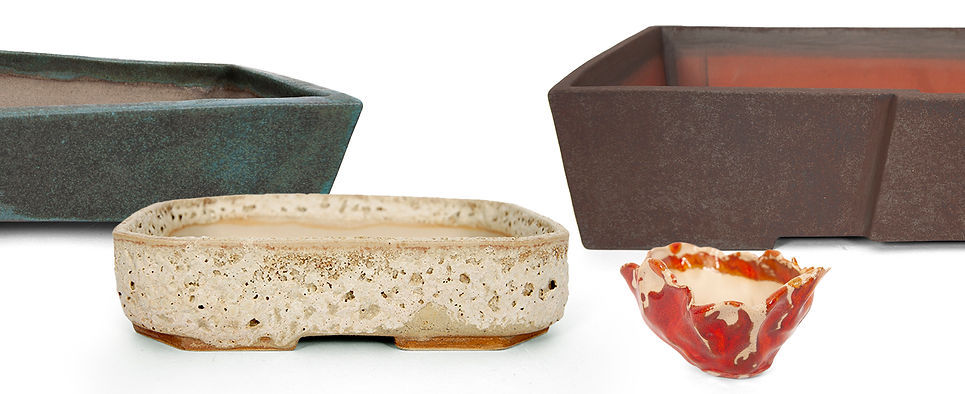
One of the unique qualities of handmade bonsai pots is that a glaze is never completely predictable.
During firing, the glaze, clay body and kiln temperature all interact with one another. This creates subtle variations in colour, texture, depth and surface effects.
The colour and composition of the clay itself also have a significant influence on the final result. The same glaze can produce a completely different appearance when applied to white, red or dark clay.
For that reason, photographs and glaze samples should always be seen as an indication rather than an exact guarantee of the finished result. This natural variation is precisely what makes every handmade bonsai pot unique.
The Overall Appearance Is What Matters
At Made Bonsai Pots, we never choose a glaze simply because it is beautiful on its own.
The glaze should always enhance the bonsai.
Sometimes an understated unglazed pot is the perfect choice. In other cases, a carefully selected glaze allows the tree to express its full beauty.
Ultimately, the question isn’t whether a pot is glazed or unglazed—it’s whether the tree and the pot form a harmonious composition.
Personal Advice
Not sure whether your bonsai would look best in a glazed or an unglazed pot?
We’re happy to help. You’re welcome to visit our studio by appointment and bring your bonsai with you. Together, we’ll compare different pots and discuss which finish best complements your tree.
If you live further away, simply send us clear photographs of your bonsai together with its dimensions and species. Based on this information, we’ll gladly advise you on the most suitable combination of clay, colour and glaze.
In Conclusion
Choosing between a glazed and an unglazed bonsai pot is never an end in itself. It’s a decision that should be guided by the character of the bonsai and the atmosphere you want to create.
At Made Bonsai Pots, we believe the finest bonsai pot is never the one that attracts the most attention—it is the one that allows the tree and the pot to become one harmonious composition.
The Made Bonsai Pots Philosophy
“We believe a bonsai pot is not a separate object, but an extension of the bonsai itself. That’s why we don’t rely on fixed rules—we look for the unique harmony between tree, pot and overall appearance.”